
Summary:
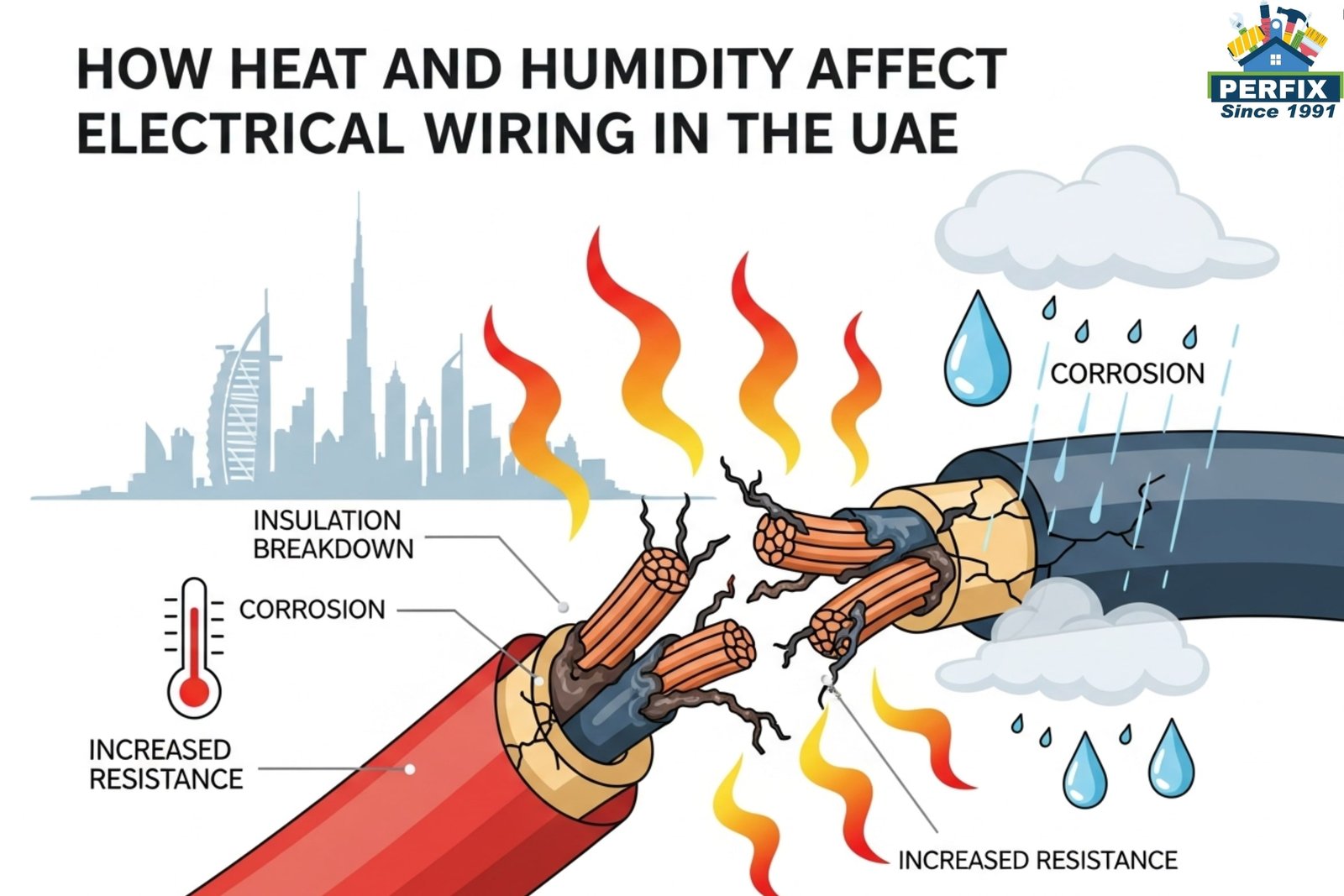
In the UAE, extreme heat, humidity, and heavy AC use quietly weaken electrical wiring by increasing resistance, cracking insulation, and corroding connections, especially in older homes not designed for today’s loads.Because this damage is mostly hidden behind walls, regular electrical safety inspections by licensed electricians are essential to detect early warning signs, prevent failures, and reduce fire risk.
In the UAE, home electrical problems rarely start suddenly. They develop quietly, driven by two forces homeowners underestimate every year: extreme heat and persistent humidity. These environmental conditions don’t just strain appliances or increase electricity bills — they physically degrade electrical wiring over time, often long before visible symptoms appear.
Understanding how this damage happens is the difference between preventive maintenance and an emergency call after a failure.
Why UAE Climate Changes How Electrical Wiring Behaves
Electrical wiring is engineered with temperature limits in mind. Most residential wiring materials are designed for moderate, stable environments, not months of sustained heat above 45°C combined with coastal humidity.
When temperatures rise inside walls, ceilings, and distribution boards, electrical resistance increases. As resistance increases, wires generate more heat while carrying the same load. This creates a feedback loop where heat produces more heat, gradually weakening insulation.
Humidity accelerates this process by introducing moisture into conduits, junction boxes, and terminals. Once moisture is present, metal components begin oxidizing, which further increases resistance at connection points.
This combination explains why wiring degradation happens faster in Abu Dhabi homes than in cooler climates.
⚡ Concerned About Heat or Humidity Damaging Your Wiring?
Extreme UAE heat and persistent humidity quietly weaken electrical wiring long before failures appear. A quick chat with a licensed electrician can help you understand early warning signs.
What Heat Actually Does to Electrical Insulation
Heat doesn’t “burn” wiring immediately. Instead, it causes insulation fatigue.
As temperatures remain high:
-
Insulation becomes rigid instead of flexible
-
Micro-cracks form along bends and joints
-
Protective sheathing loses elasticity
Once insulation cracks, copper conductors are exposed to air and moisture. That exposure doesn’t cause instant failure, but it creates leakage paths, increasing the risk of short circuits and arcing.
In villas and older apartments, this process is often hidden behind walls for years, which is why electrical inspections matter more in the UAE than most homeowners realize.
How Humidity Quietly Damages Wiring Connections
Humidity doesn’t attack wires evenly. It targets connection points.
Inside switch boxes, distribution boards, and sockets, moisture condenses during temperature fluctuations — especially at night when air cools. This condensation settles on terminals and screws, causing corrosion.
Corrosion increases resistance. Increased resistance creates localized heat. Localized heat loosens connections.
This sequence explains why many UAE residents experience:
-
Flickering lights
-
Warm switches
-
Buzzing outlets
These are not appliance problems. They are environment-driven wiring failures.
Why AC Usage Makes the Problem Worse
Air conditioners don’t just cool homes. They change electrical load patterns.
During peak summer months, AC systems draw continuous high current for long hours. That sustained load forces wiring to operate near its thermal limit.
If insulation is already weakened by heat or moisture, this constant load accelerates breakdown. Over time, circuits that were safe during winter become unstable during summer — without any changes to appliances.
This is why electrical failures in the UAE spike between May and September.
🔍 Detect Climate-Driven Electrical Damage Before It Escalates
Heat fatigue, moisture corrosion, and continuous AC load place wiring under constant stress in UAE homes. A professional inspection helps identify insulation breakdown and overloaded circuits early.
Older UAE Properties Face Higher Risk
Homes built more than 10–15 years ago were designed for lower electrical demand.
At the time:
-
Fewer high-load appliances existed
-
Smart systems were rare
-
Continuous AC usage wasn’t as intense
As a result, wiring gauge, insulation quality, and panel capacity often fall short of modern requirements. When combined with today’s climate stress, these systems degrade faster.
This is where electrical panel upgrades and rewiring assessments become safety measures, not luxury upgrades.
Why This Damage Is Often Missed Until It’s Serious
Electrical wiring doesn’t fail like plumbing. There’s no visible leak.
Instead, homeowners ignore early warning signs:
-
Slight burning smells
-
Occasional breaker trips
-
Dimming lights during AC startup
These signs appear minor because the damage is gradual. Unfortunately, by the time a fault becomes obvious, the wiring has already degraded significantly.
Regular electrical safety inspections are the only reliable way to detect climate-driven damage early.
How Licensed Electricians Prevent Climate-Related Wiring Failure
Professional electricians in the UAE don’t just “fix faults.” They assess environmental exposure.
This includes:
-
Measuring heat buildup inside panels
-
Checking insulation brittleness
-
Inspecting corrosion at terminals
-
Verifying load balance across circuits
When needed, they recommend targeted solutions such as improved insulation, better ventilation, or panel upgrades — all aligned with UAE safety codes.
This proactive approach prevents failures rather than reacting to them.
🛡️ Protect Your Home from Climate-Related Electrical Failure
Prolonged heat, humidity, and heavy AC usage accelerate wiring degradation in UAE properties. A licensed electrical safety inspection helps prevent breakdowns, fire risks, and costly emergency repairs.
FAQs
Does humidity really affect electrical wiring inside walls?
Yes. Moisture enters conduits and junction boxes through condensation, especially in coastal areas. Over time, it corrodes terminals and increases resistance.
Is AC usage the main cause of wiring damage in the UAE?
AC usage isn’t the cause, but it accelerates existing weaknesses by applying continuous high electrical load during extreme heat.
How often should wiring be inspected in UAE homes?
For villas and older apartments, inspections every 2–3 years are recommended, or immediately if signs like flickering or warm outlets appear.
Can rewiring be avoided with maintenance?
In some cases, yes. Early detection allows targeted repairs. However, severely aged wiring often requires partial or full replacement for safety.
How does UAE heat damage electrical wiring?
UAE heat increases electrical resistance inside wires, causing them to generate excess heat while carrying normal loads. Over time, this weakens insulation, creates cracks, and exposes conductors. When combined with humidity, corrosion forms at connections, increasing fire and failure risk in homes.


Leave a Reply